

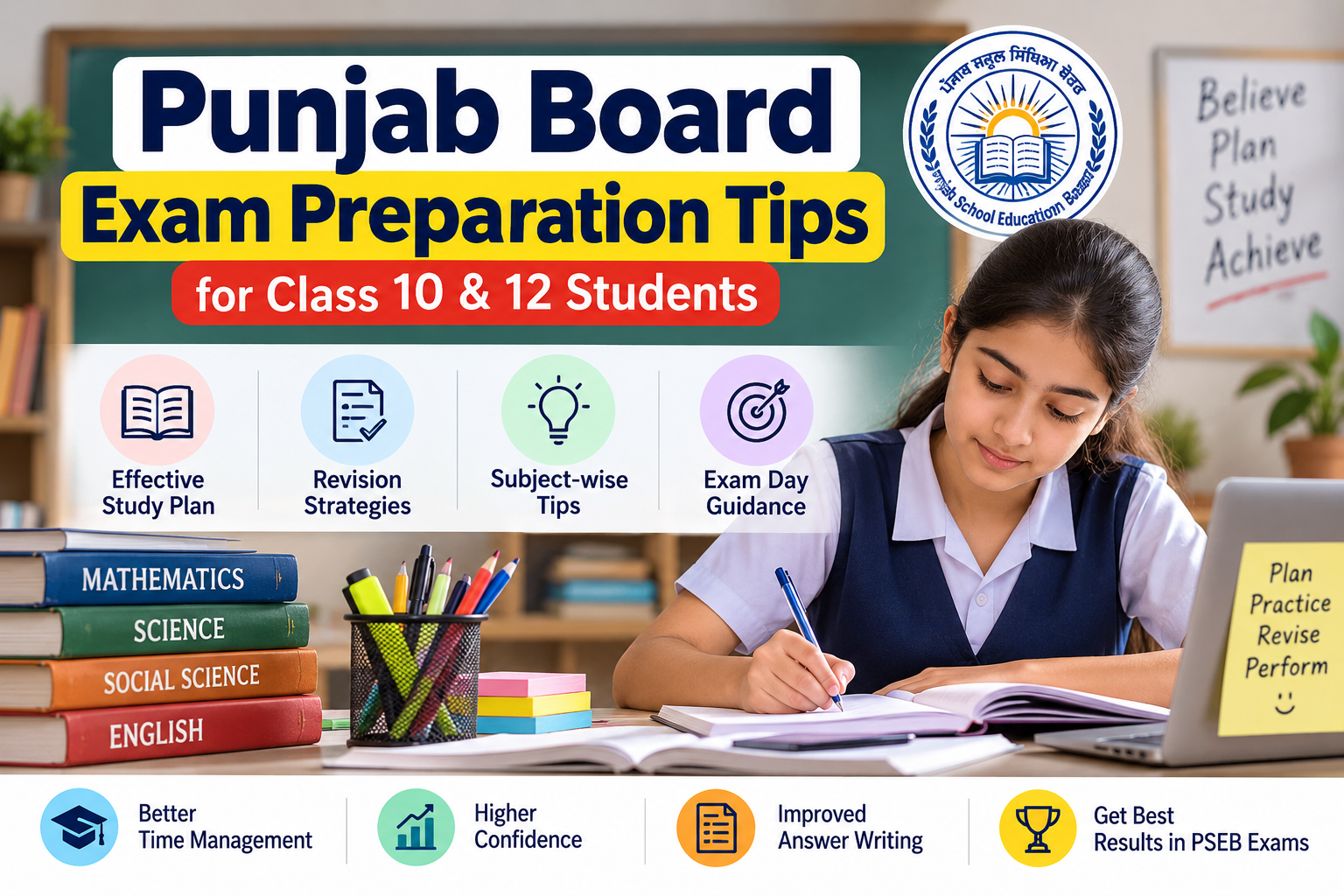
Punjab Board Exam Preparation Tips for Class 10 and 12 Students
Preparing for Punjab School Education Board (PSEB) examinations becomes easier when you follow a realistic timetable, practise regularly and focus on understanding rather than memorising. Whether you are appearing for Class 10 or Class 12 board exams, these practical tips can help you study confidently.
1. Start with the Latest PSEB Syllabus
Check the syllabus and exam-related notices on the official PSEB website. Make a subject-wise checklist of chapters and mark each topic as not started, in progress or revised. Avoid relying only on outdated guides.
2. Create a Realistic Daily Study Timetable
Divide your day into focused sessions for difficult subjects, revision and practice questions. For example, spend 45–60 minutes on a challenging topic, take a short break, then switch to another subject. Leave time for schoolwork, meals, sleep and exercise. Consistency matters more than studying for unusually long hours.
3. Understand Concepts Before Memorising
For Mathematics and Science, work through examples step by step and explain each concept in your own words. For History, Social Science and language subjects, make short notes with key dates, terms and themes. Ask teachers about topics you do not understand.
4. Practise Previous Papers and Sample Questions
Use available PSEB sample papers and past question papers to become familiar with question styles and time management. Attempt a full paper under timed conditions, then review errors. Paper formats can change, so always confirm the current pattern with official materials and your teachers.
5. Revise with Short Notes and Active Recall
Make formula sheets, flashcards, chapter summaries and diagrams. After studying a chapter, close the book and write down what you remember. Revisit weak topics after a day, a week and again before the examination.
6. Improve Your Answer-Writing Skills
Read each question carefully, answer what is asked and organise longer answers with clear points. Show calculations and units where relevant. Practise writing legibly and reserve a few minutes at the end to check your work.
7. Focus on Your Weak Subjects
Keep an error notebook containing mistakes from homework, tests and practice papers. Review it weekly. If a topic repeatedly causes difficulty, request help from a teacher or study partner rather than skipping it.
8. Take Care of Your Health
Maintain regular sleep, eat balanced meals, stay hydrated and take short movement breaks. Avoid all-night cramming before exams. A calm routine helps you concentrate and remember information.
9. Prepare for Exam Day
Confirm your examination date, reporting time, centre and permitted materials from your official admit card and school instructions. Pack the required stationery in advance. Reach the centre with enough time and follow the invigilator’s directions.
10. Make a Final Revision Plan
In the final weeks, prioritise high-importance and weaker chapters without ignoring the rest of the syllabus. Practise timed papers, revise formulas and key definitions, and avoid starting too many new reference books.
Frequently Asked Questions
How many hours should I study daily for Punjab Board exams?
There is no single ideal number. Plan manageable, focused study sessions around school, homework and rest. Measure progress by topics understood and questions solved rather than hours alone.
Are previous-year papers useful for PSEB exams?
Yes. They help with practice and time management, but you should also check the latest official syllabus and current exam pattern.
What should I do if I feel nervous before an exam?
Follow a simple revision schedule, get enough sleep, practise a few familiar questions and talk to a trusted teacher or family member if anxiety feels overwhelming.
Where can I find official Punjab Board updates?
Visit the PSEB official website and check notices shared by your school for verified updates.
Final Thoughts
Good Punjab Board exam preparation is built on a clear plan, daily practice, regular revision and healthy habits. Start with one chapter today, track your progress and keep improving steadily. Best wishes for your exams!
